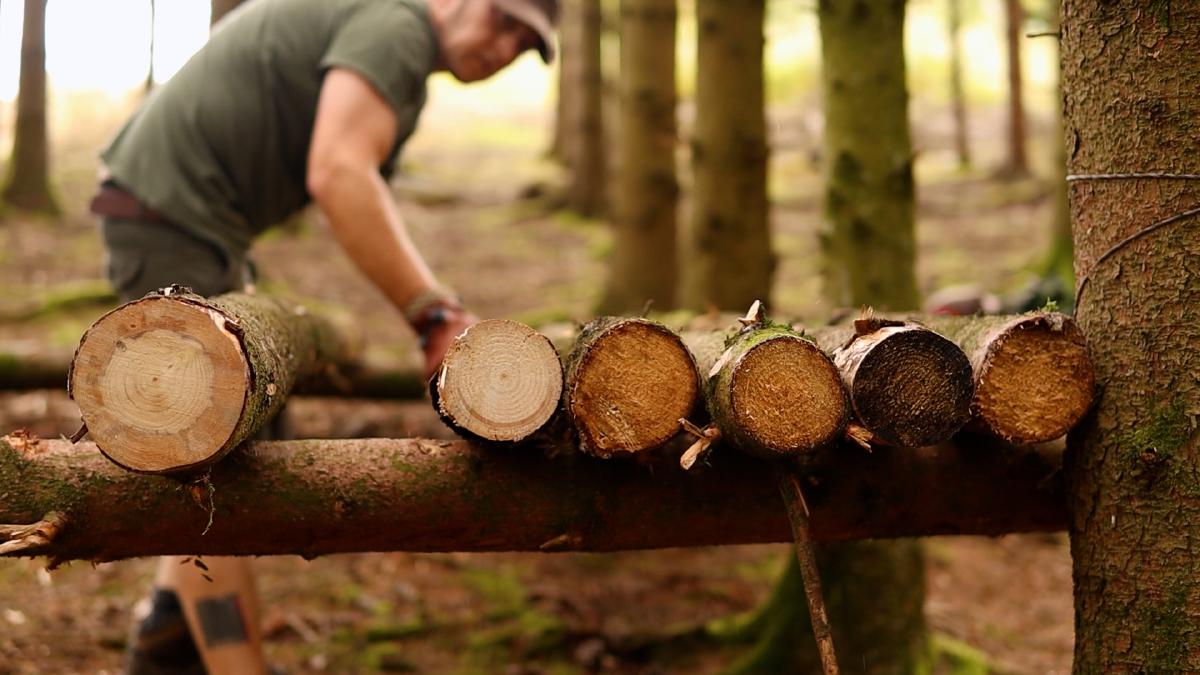
Sometimes the best nights in the forest start with the least equipment. No tent, no sleeping pad, no elaborate setup — just a handful of tools, some rope, and the idea of building a proper bushcraft bed right into the slope. That was exactly the plan for this solo overnight.
Finding the Right Spot#
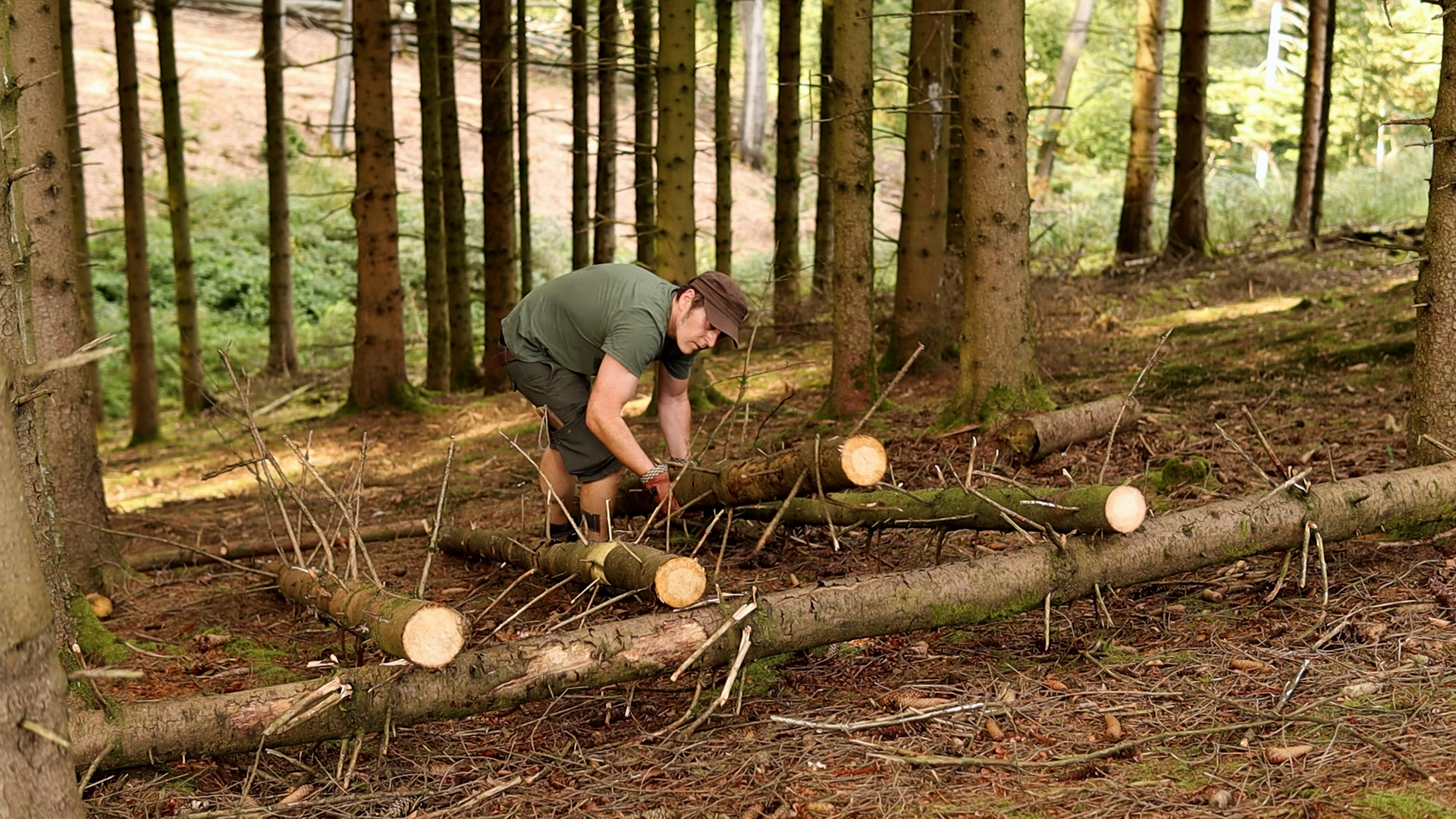
The terrain I picked was far from flat. A moderate hillside, mixed forest, plenty of deadwood around. Not the most obvious choice for spending the night, but that was kind of the point. I wanted to try something I’d seen in a video by Rocco Hartwig — a raised wooden bed frame built directly on uneven ground. If the construction was solid enough, the slope wouldn’t matter at all.
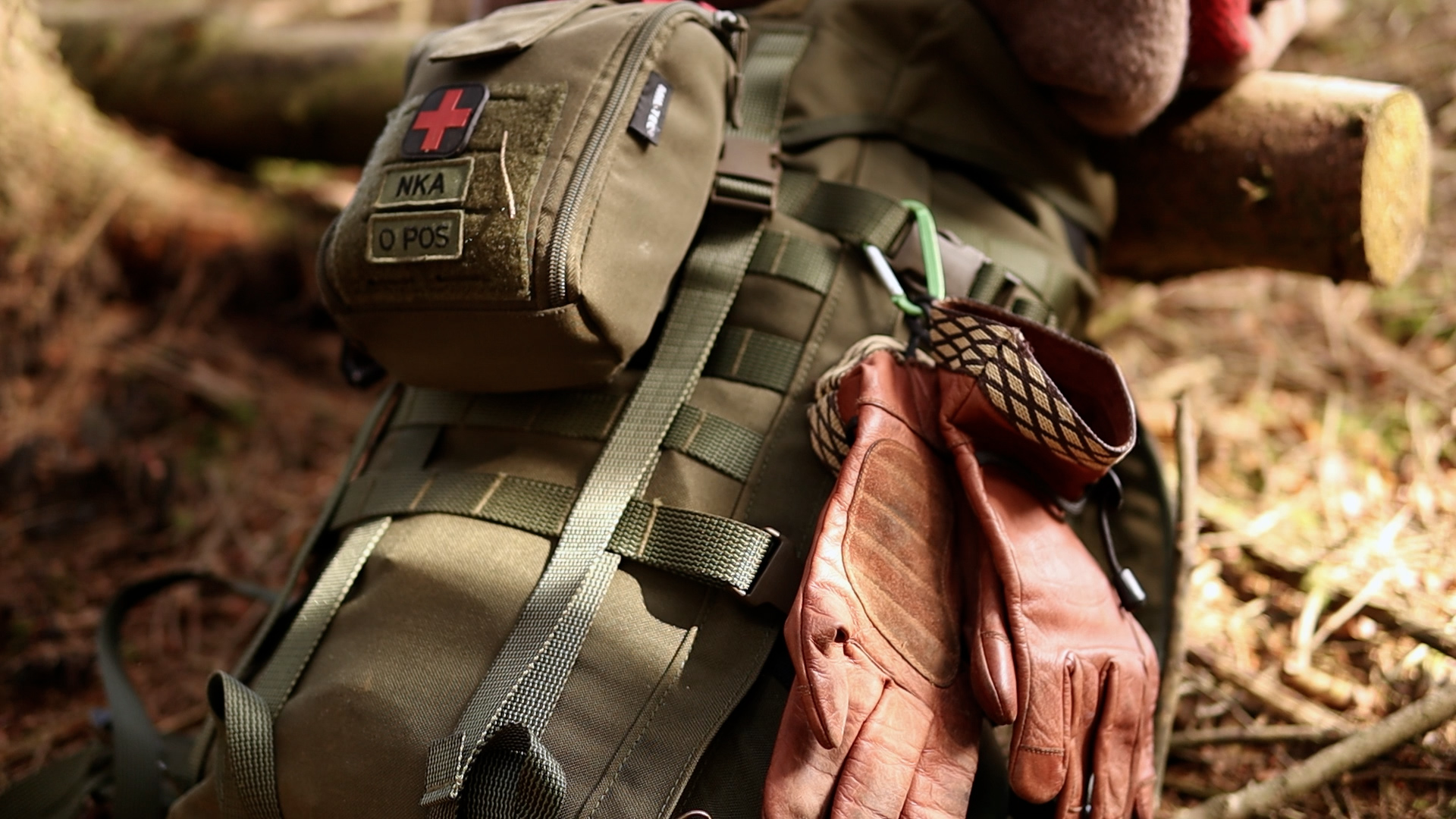
I dropped my Savotta Jäger M at the base of a beech tree and started looking for the right logs. The backpack had carried everything I needed without complaint — it’s one of those packs that just works, trip after trip. With my Helikon-Tex Woodcrafter gloves on, I began gathering suitable pieces of deadwood for the frame.
Building the Bed Frame#
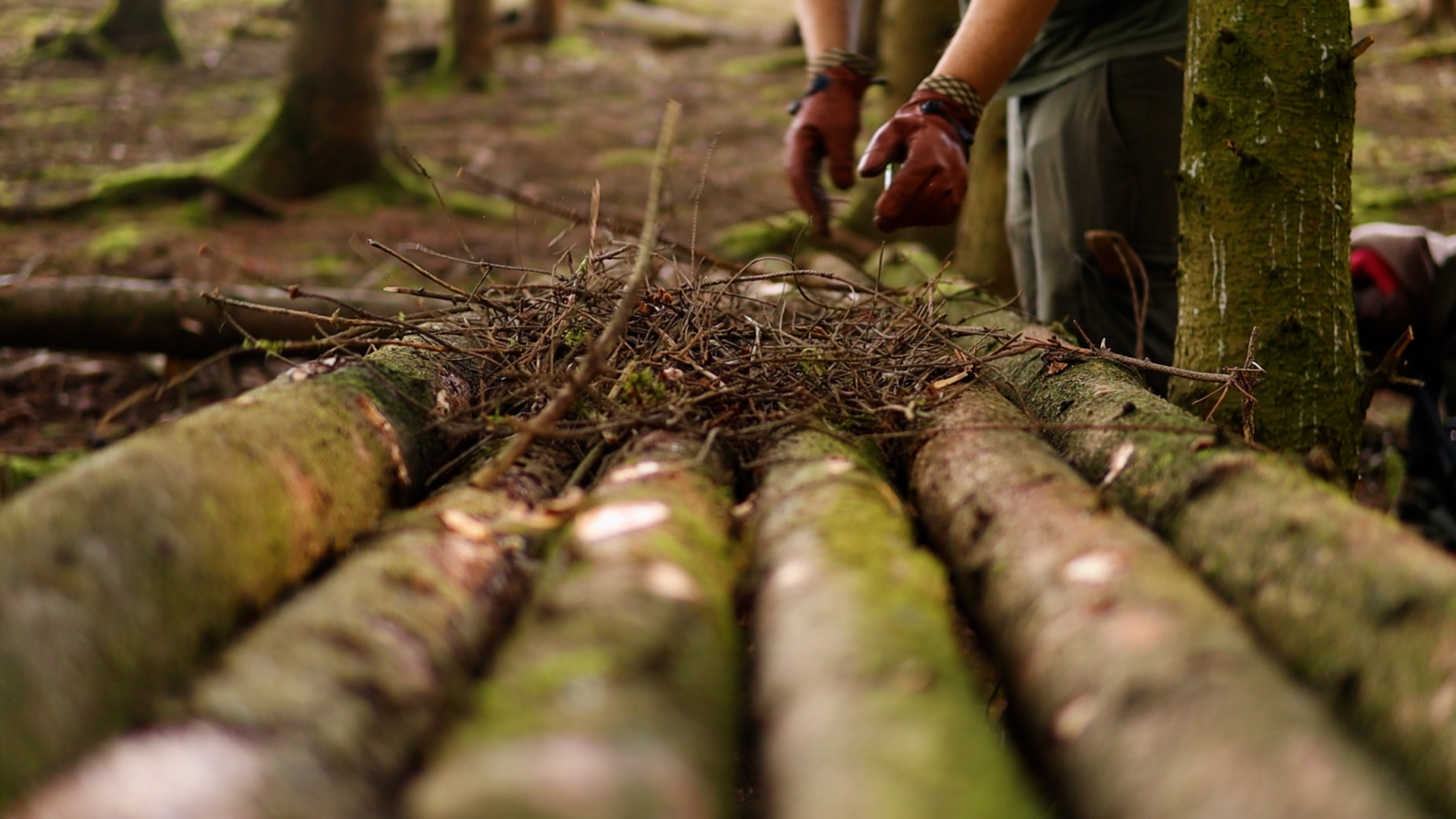
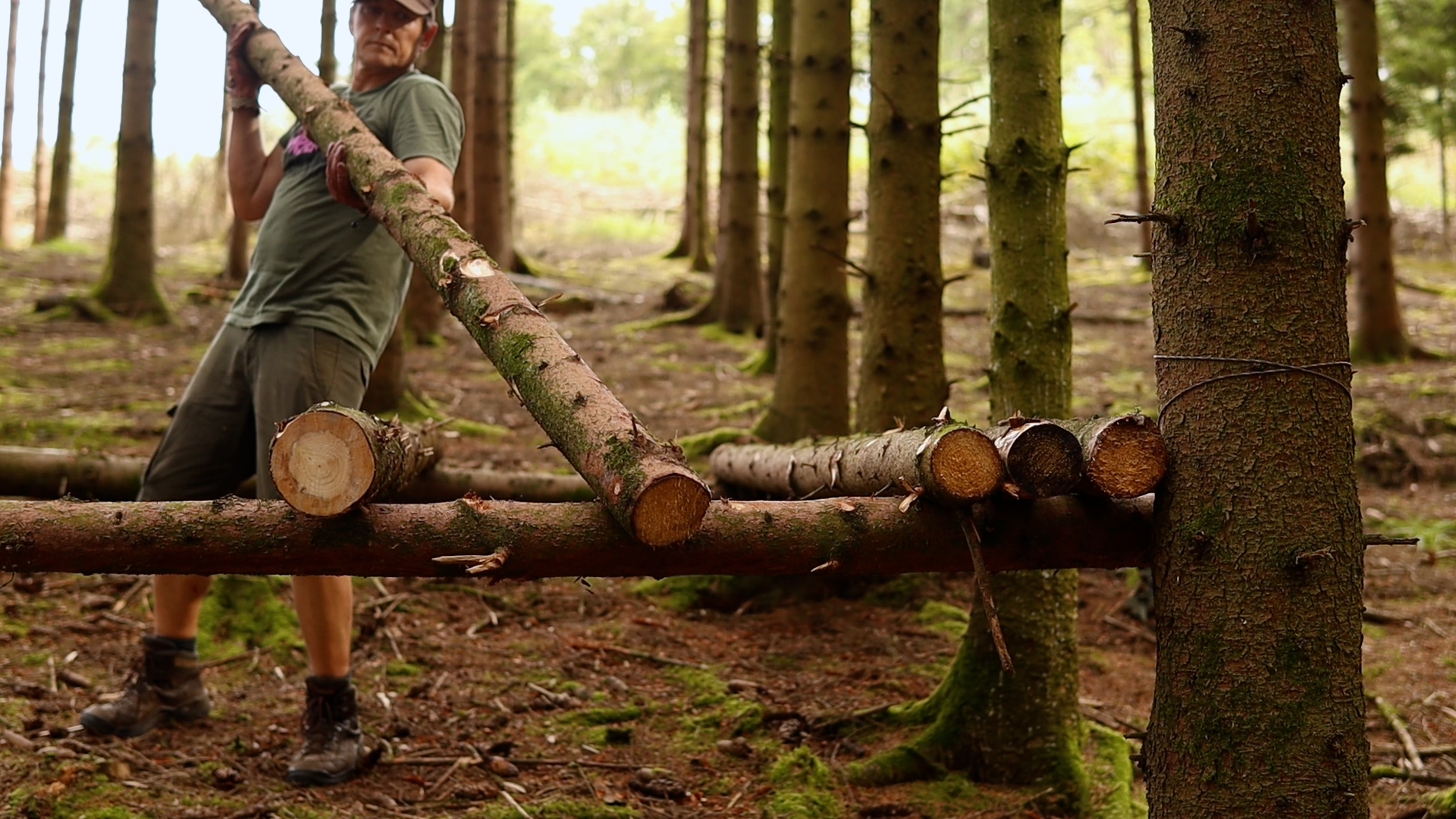
The construction itself was straightforward but took some patience. I used the Terävä Skrama 240 for all the heavy processing — splitting thicker logs, flattening surfaces, carving notches. That knife is an absolute workhorse. For cutting logs to length, I switched to the Silky Gomboy Outback 240, which sliced through green and dead wood alike without fuss.
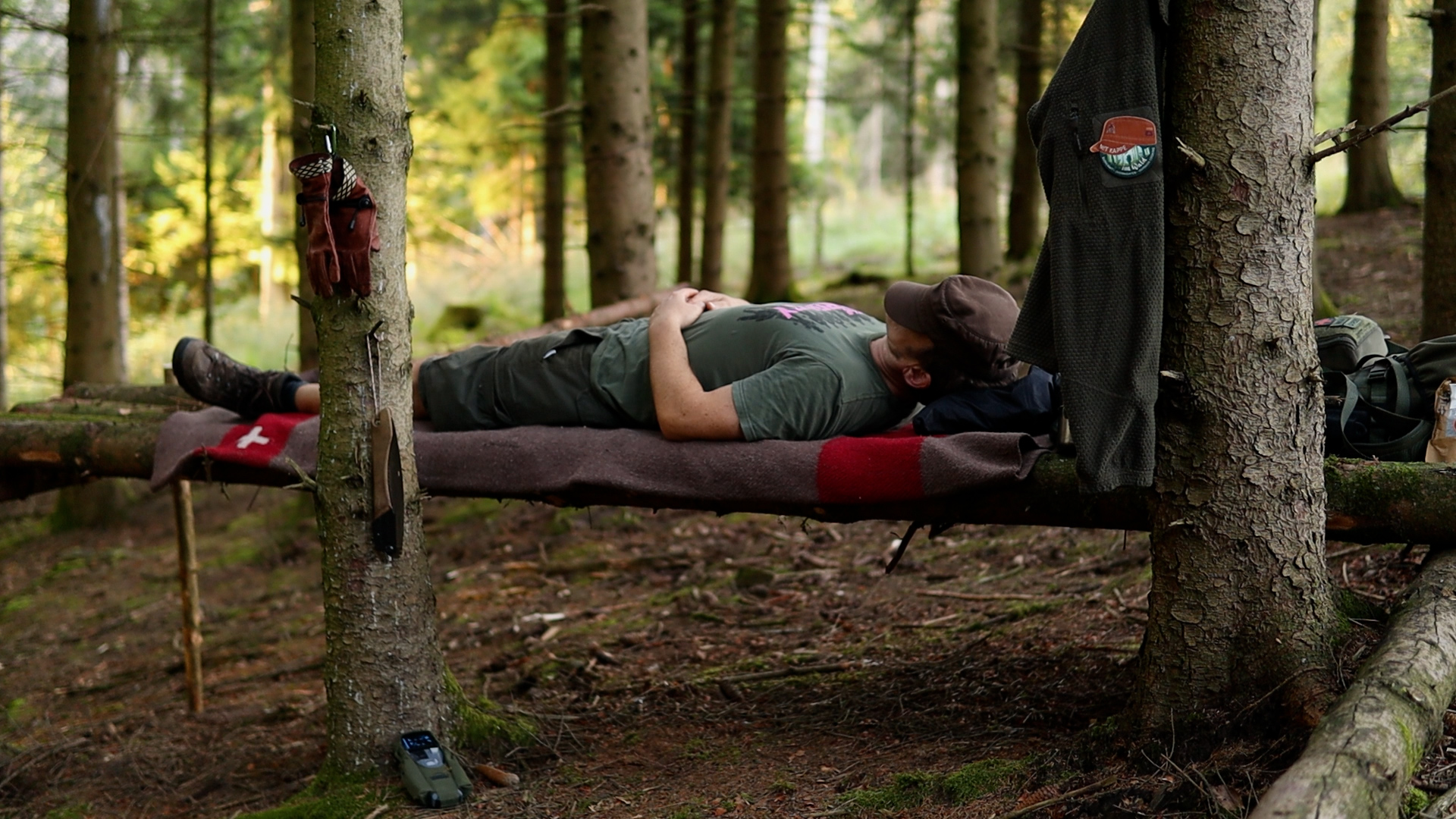
The basic idea: two longer logs running parallel along the slope, supported by shorter cross-pieces driven into the ground on the downhill side to create a level platform. I lashed everything together with Paracord 550, wrapping each joint tightly. Once the frame was stable, I laid thinner branches across the top — close together, roughly the same thickness — forming a surprisingly even sleeping surface. A thick layer of leaf litter and moss on top added the final bit of cushioning.
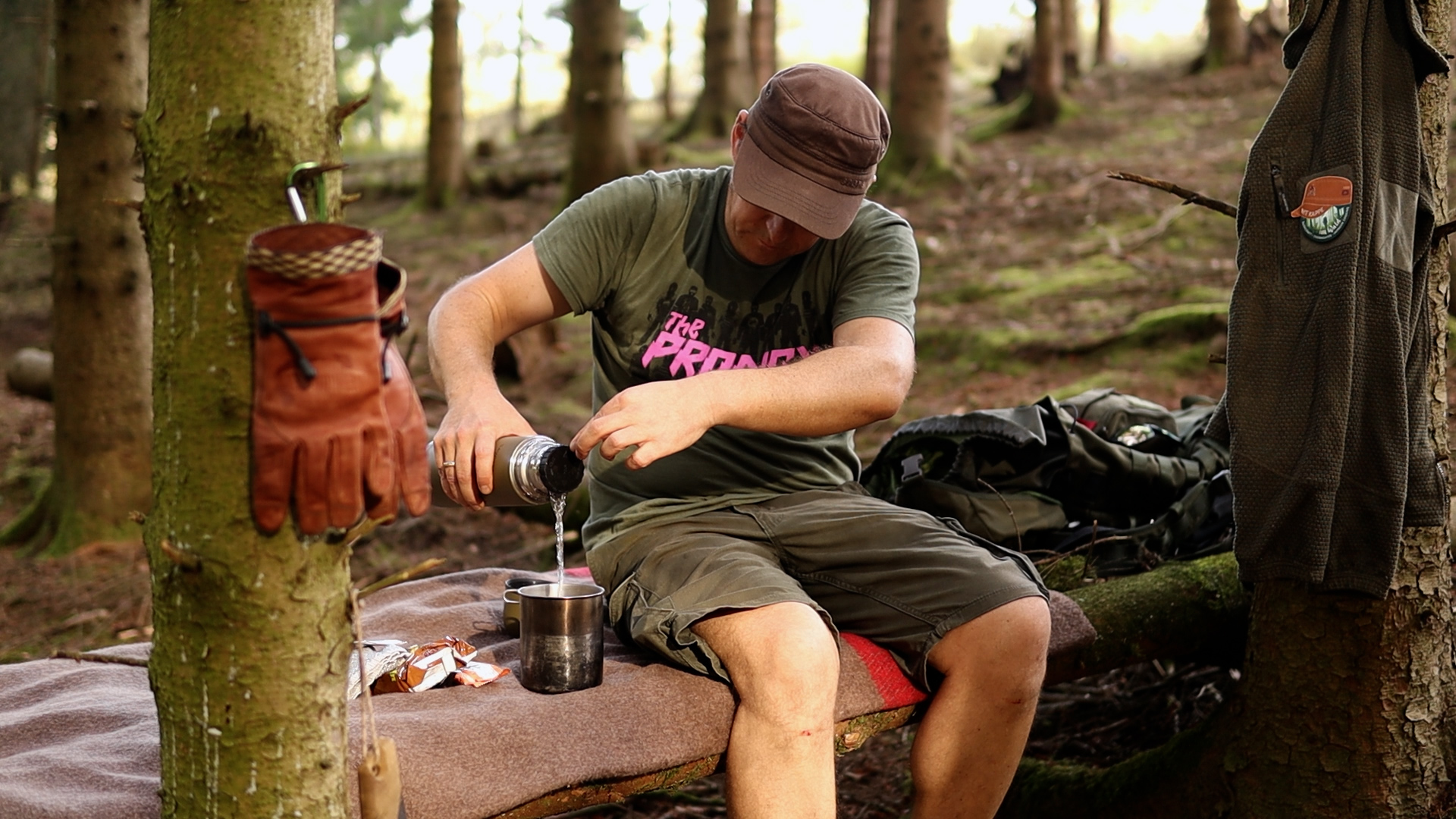
The whole build took maybe an hour and a half. No rushing, no stress. Just quiet work in the woods, the sound of the saw and the occasional crack of splitting wood.
Settling In for the Night#
With the bed finished, there wasn’t much else to do. I sat on the edge of my new construction, had something to eat, and watched the light change between the trees. The Helikon-Tex Alpha Tactical Grid Fleece kept me warm enough as the temperature dropped — layered over my Icebreaker 200 Oasis pants, I was comfortable without being overdressed.
When it was time to sleep, I wrapped myself in a Swiss Army blanket and stretched out on the bed. Honestly, I wasn’t sure what to expect. A wooden frame on a hillside, a wool blanket, no sleeping bag — it could have gone either way. But the bed held perfectly, the surface was level, and the wool blanket trapped enough warmth to get me through the night without trouble.
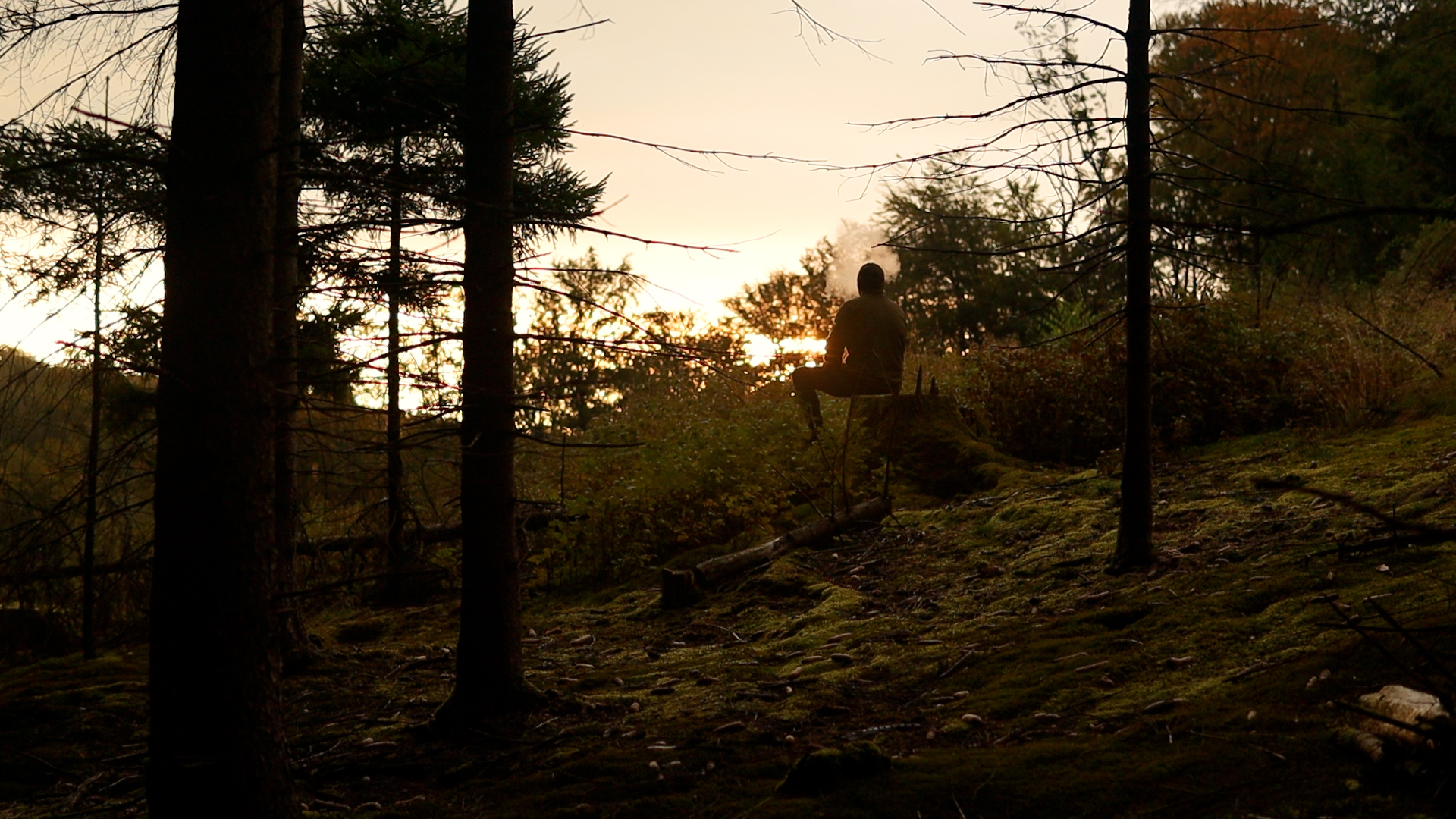
I slept surprisingly well. The forest was quiet except for the occasional rustle in the undergrowth. Waking up in the grey morning light, still warm under the blanket, felt like a small victory. No fancy gear, no elaborate camp — just a solid bed I’d built with my own hands.
Morning and Leaving Clean#
I packed up early. The paracord went back into the pack, and I scattered the branches and leaves. Within a few minutes, you’d have had a hard time telling anyone had been there at all. Leave No Trace is something I take seriously, especially on builds like this where you’re working directly with the forest floor.
Walking out in my Lowa Renegade GTX Mid boots, pack on my back, I was already thinking about the next overnight. There’s something deeply satisfying about spending a night outside with almost nothing — and realising that almost nothing is actually enough.