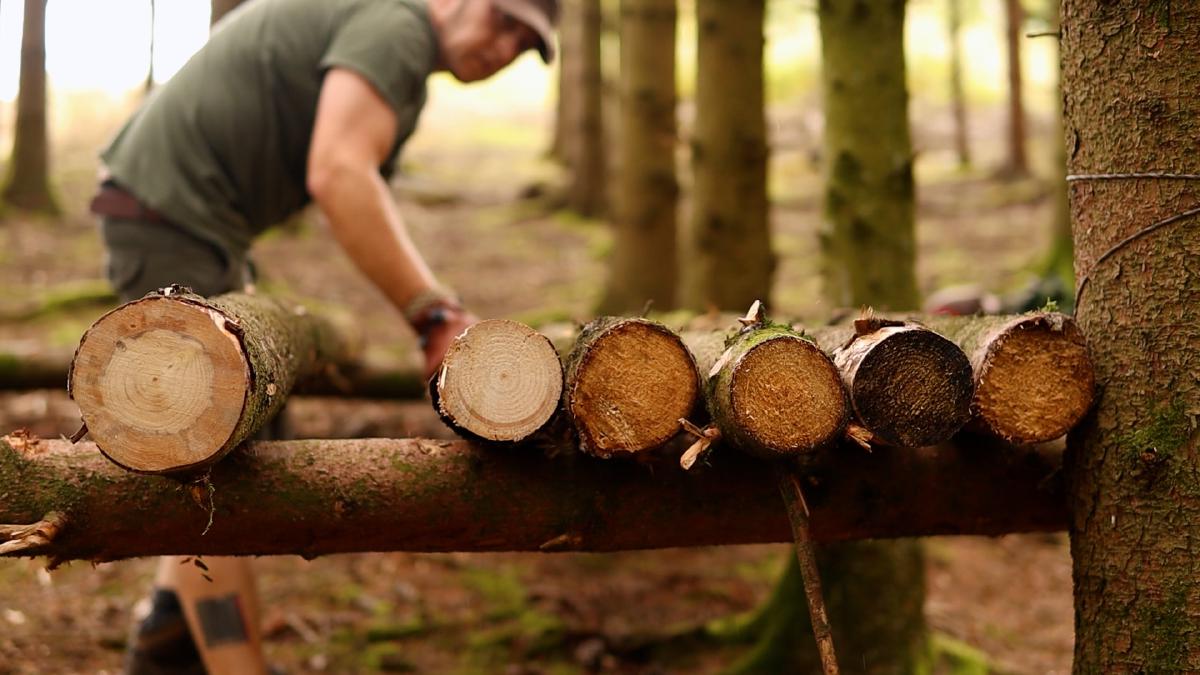
Some nights in the forest start with the decision to carry as little as possible. No tent, no sleeping pad, no elaborate camp, just a few tools, some rope and the idea of building a bushcraft bed right into the slope. That was the plan for this solo overnighter.
Finding the Right Spot#
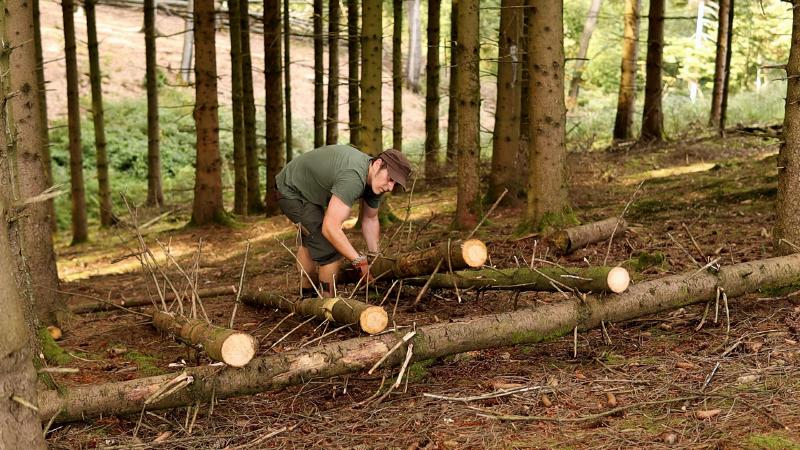
The terrain I picked was anything but flat. A moderately steep hillside, mixed forest, deadwood everywhere. Not the obvious choice for spending the night, but that was the point. I wanted to try something I had seen in a video by Rocco Hartwig: a raised wooden bed frame built straight onto uneven ground. If the build was solid enough, the slope would not matter.
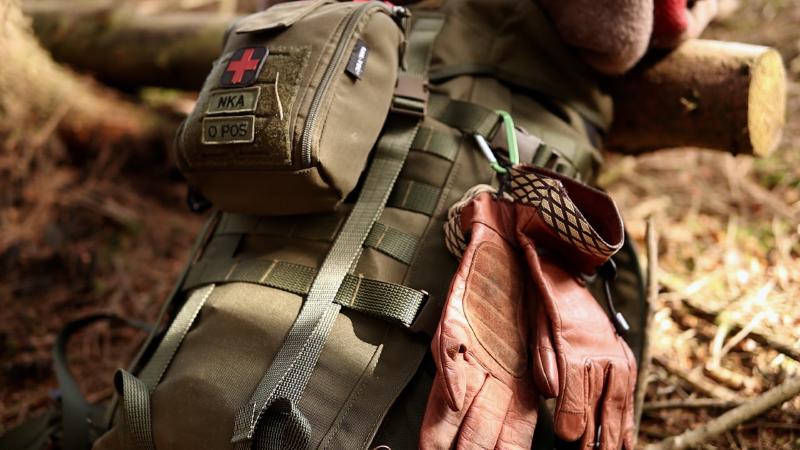
I set my Savotta Jäger M down at the foot of a beech and started looking for suitable logs. The pack had carried everything I needed without complaint, one of those packs that just works, trip after trip. With the Helikon-Tex Woodcrafter leather gloves on, I gathered usable pieces of deadwood for the frame.
Building the Bed Frame#
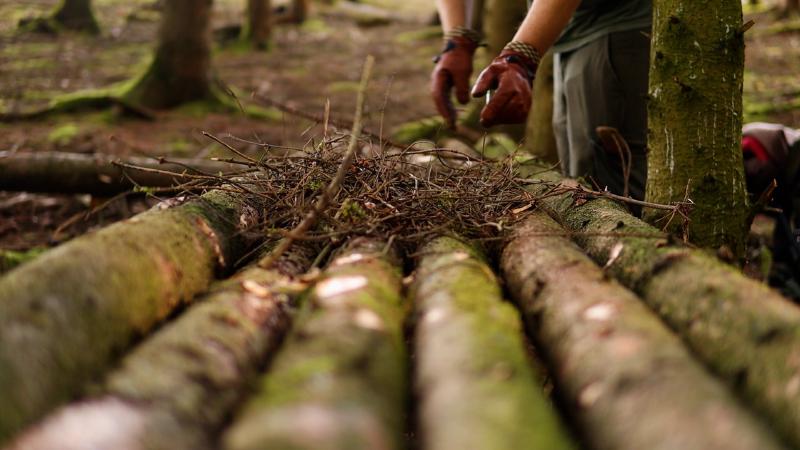
The build itself was simple but took some patience. For the rough work I used the Terävä Skrama 240: splitting thicker logs, flattening surfaces, carving notches. That knife is a real workhorse. For cutting the logs to length I switched to the Silky Gomboy Outback 240, which ate through green and dead wood alike without trouble.
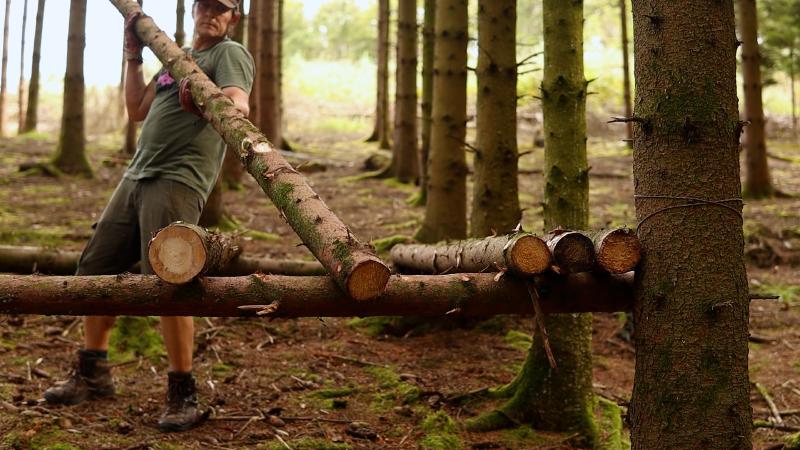
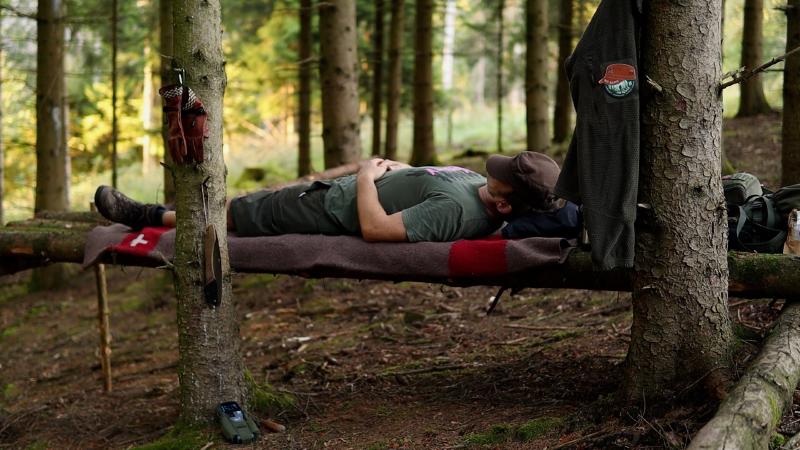
The basic principle: two longer logs parallel to the slope, supported by shorter cross-pieces driven into the ground on the downhill side. That created a level platform. I lashed every joint tightly with Paracord 550, wrapping each crossing cleanly. On the finished frame I laid thinner branches close together, as even in thickness as possible, which gave a surprisingly flat sleeping surface. A thick layer of leaf litter and moss on top added the final cushioning.
The whole build took maybe an hour and a half. No rushing, no stress. Just quiet work in the woods, the sound of the saw and the occasional crack of splitting wood.
Settling In for the Night#
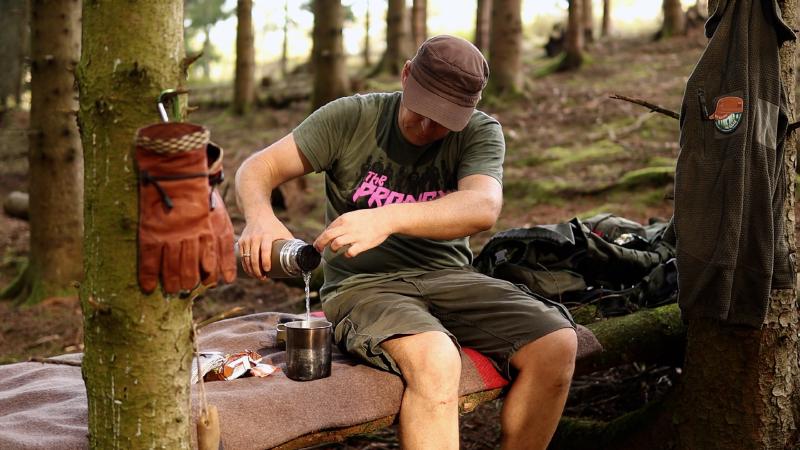
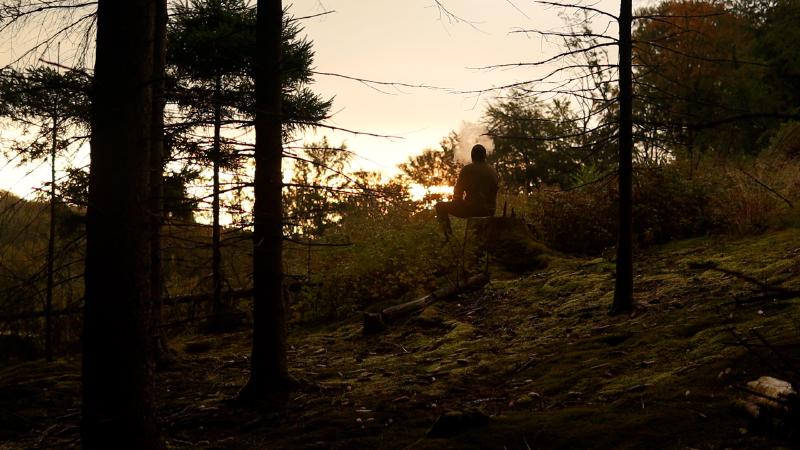
With the bed finished there was not much left to do. I sat on the edge of my new build, ate something and watched the light change between the trees. The Helikon-Tex grid fleece kept me warm enough as the temperature dropped.
When it was time to sleep, I wrapped myself in the Swiss Army blanket and stretched out on the bed. Honestly, I was not sure what to expect. A wooden frame on a slope, a wool blanket, no sleeping bag: that could have gone wrong. But the bed held, the surface was level, and the wool blanket stored enough warmth to get me through the night without trouble.
I slept surprisingly well. The forest was quiet apart from the occasional rustle in the undergrowth. Waking up in the grey morning light, still warm under the blanket, felt like a small win. No fancy gear, no big camp, just a solid bed I had built with my own hands.
Morning and Leaving Clean#
I packed up early. The paracord went back into the pack, the branches and leaves got scattered again. After a few minutes you could hardly tell anyone had slept there. On builds like this, where you work directly with the forest floor, that matters to me.
On the way back, pack on my shoulders, I was already thinking about the next overnighter. A night outside with almost nothing, and almost nothing was completely enough.